Deliverable
Technical Drawings
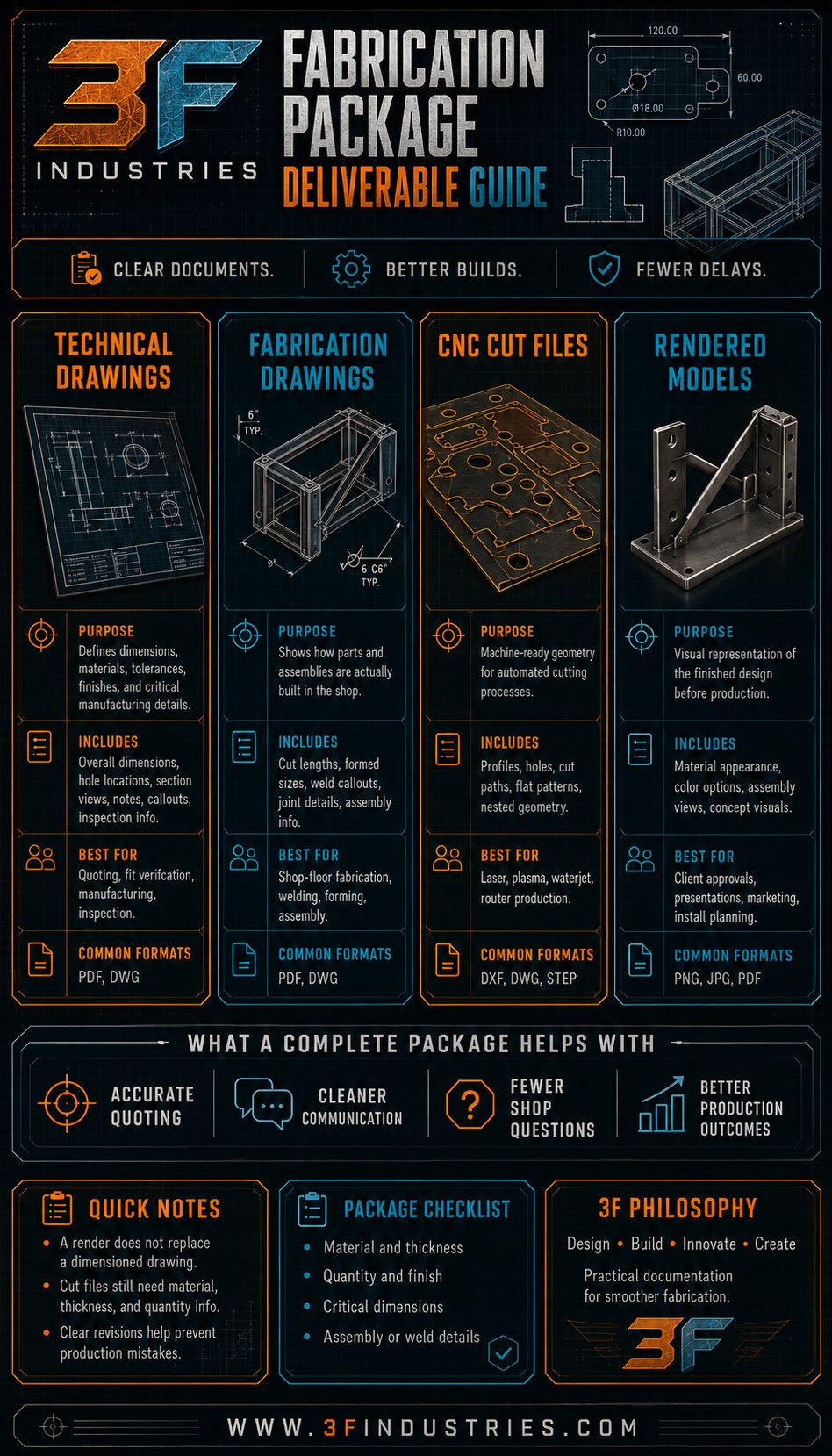
Technical drawings communicate the dimensions, materials, tolerances, finishes, and manufacturing details required to build a part or assembly. Depending on the project, a drawing package may include overall dimensions, hole locations, weld symbols, bend information, section views, hardware callouts, assembly details, and inspection requirements. Especially important when parts must fit existing equipment, align with other components, or be reproduced consistently.
Deliverable
Fabrication Drawings
Fabrication drawings are shop-focused documents that show how a part or assembly should be manufactured. They may include cut lengths, formed dimensions, weld locations, joint details, assembly sequence, material thicknesses, and references to individual components — organized around the actual build process for welders, fitters, machinists, and fabricators on the shop floor.
Deliverable
CNC Cut Files
CNC cut files provide the machine-ready geometry used to produce parts with equipment such as laser cutters, plasma tables, waterjets, routers, or other automated cutting systems — typically delivered as DXF, DWG, STEP, or another required format. Files should be checked for duplicate lines, open profiles, incorrect scale, and missing features before delivery. Cut files normally contain cutting geometry only; material type, thickness, quantity, and finish should be communicated separately.
Deliverable
Rendered Models
Rendered models provide a clear visual representation of the completed design before fabrication begins — helping confirm proportions, colors, materials, component placement, and overall appearance with clients, project teams, or decision-makers. Useful for concept approval, presentations, marketing, and installation planning. A rendered model supports the fabrication package, but it does not replace dimensioned drawings or machine-ready files.
Why the complete package matters
Fewer questions. Fewer mistakes. Better results.
A complete fabrication package keeps the design, customer, and shop working from the same information. When dimensions, materials, finishes, weld requirements, and file formats are clearly documented, quoting becomes more accurate and production becomes more efficient. Incomplete information can lead to delays, incorrect parts, unnecessary revisions, material waste, and disagreements about the finished result.