A quick-reference comparison
The chart below compares commonly used metals and welding processes based on strength, corrosion resistance, weight, weldability, appearance, cost, and typical applications. These recommendations are general guidelines. Final material and welding selections should be based on the project's operating environment, loading, dimensions, finish requirements, and fabrication needs.
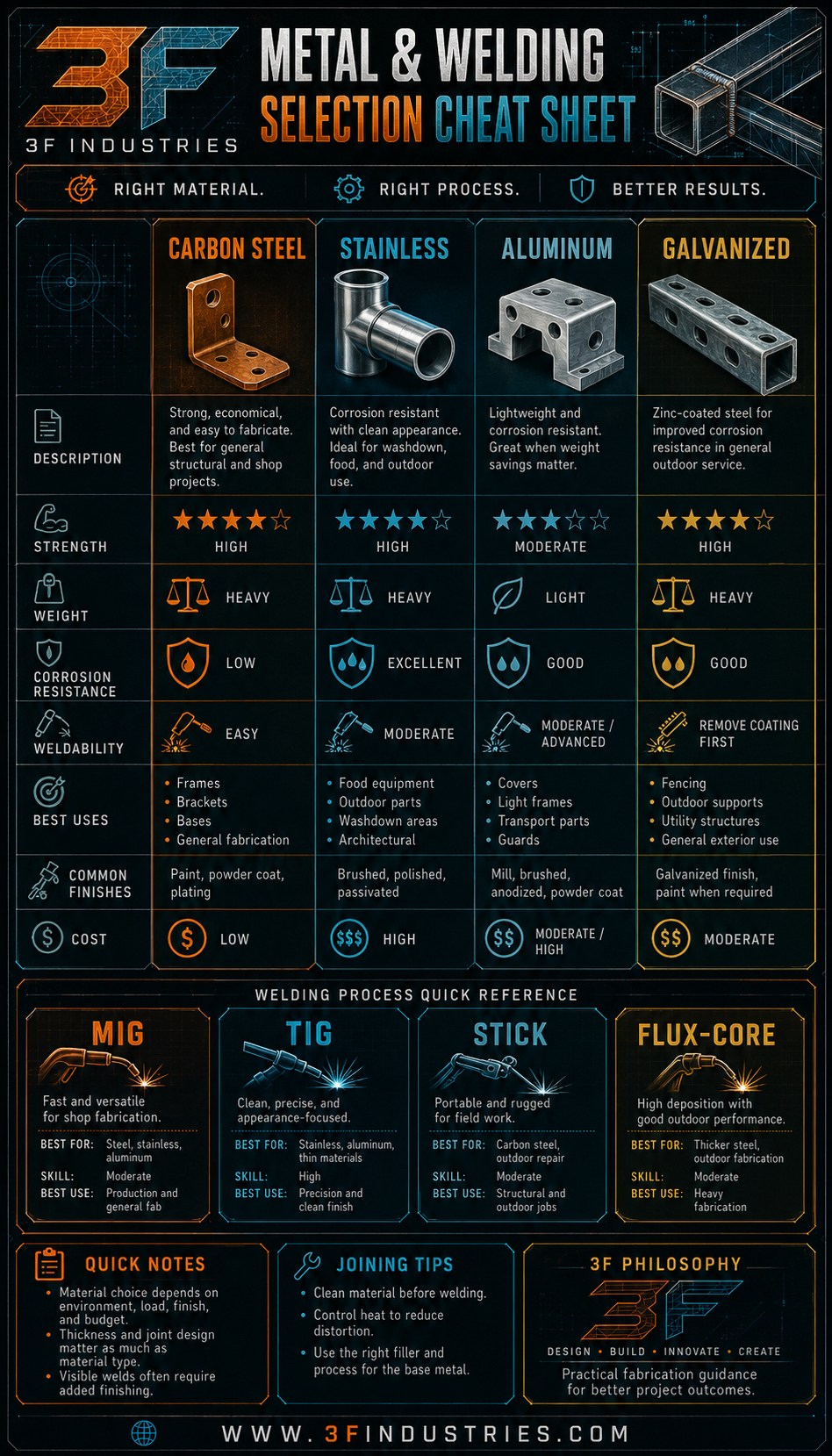
Picking the right metal
Start with the environment in which the finished product will be used. Consider whether the part will be installed indoors or outdoors, exposed to moisture, chemicals, heat, food products, repeated cleaning, impact, vibration, or heavy loads. These conditions can quickly narrow down which materials are appropriate.
Carbon steel is commonly used for structural frames, supports, equipment bases, brackets, and general fabrication. It offers good strength and value but usually requires paint, powder coating, plating, or another protective finish to prevent corrosion.
Stainless steel is often selected for food-processing equipment, washdown environments, outdoor applications, and projects where corrosion resistance and appearance are important. It typically costs more and requires greater care during fabrication and finishing.
Aluminum is lightweight and naturally corrosion resistant, making it useful for covers, platforms, guards, frames, transportation equipment, and components where reduced weight is important. However, it requires different welding techniques and may not provide the same stiffness as steel at an equal thickness.
Material thickness is just as important as material type. A thicker material is not automatically the best choice. Weight, forming requirements, weld access, distortion, available equipment, and expected loading should all be considered before a final thickness is selected.
What to consider before welding
Not every metal can be welded using the same process, filler material, settings, or joint preparation.
Material type, thickness, joint design, weld position, access, appearance, production quantity, and required strength all influence how a part should be welded. Contamination, coatings, rust, oil, moisture, and improper surface preparation can also affect weld quality.
Thin sheet metal can distort, warp, or burn through when too much heat is applied. Thicker materials may require beveling, multiple weld passes, preheating, or specialized equipment to achieve proper penetration.
Welding can also change nearby dimensions. Heat causes metal to expand and contract, which may pull assemblies out of square or affect hole alignment, flatness, and fit-up. Parts with tight tolerances may require fixturing, controlled weld sequencing, machining after welding, or additional inspection.
Some projects may be better suited for bolts, rivets, threaded inserts, adhesives, formed connections, or a combination of joining methods. A welded connection is not automatically stronger, cheaper, or more serviceable than a mechanical connection.
Visible welds also require additional planning. Weld size, placement, grinding, blending, polishing, discoloration removal, and coating preparation can significantly affect the finished appearance and project cost.
Load-bearing, pressure-containing, regulated, sanitary, or safety-critical assemblies may require engineered weld details, qualified procedures, certified welders, inspection, testing, or compliance with applicable industry standards.